

The Stage of Motherhood Nobody Names (But Every Mother Recognises)
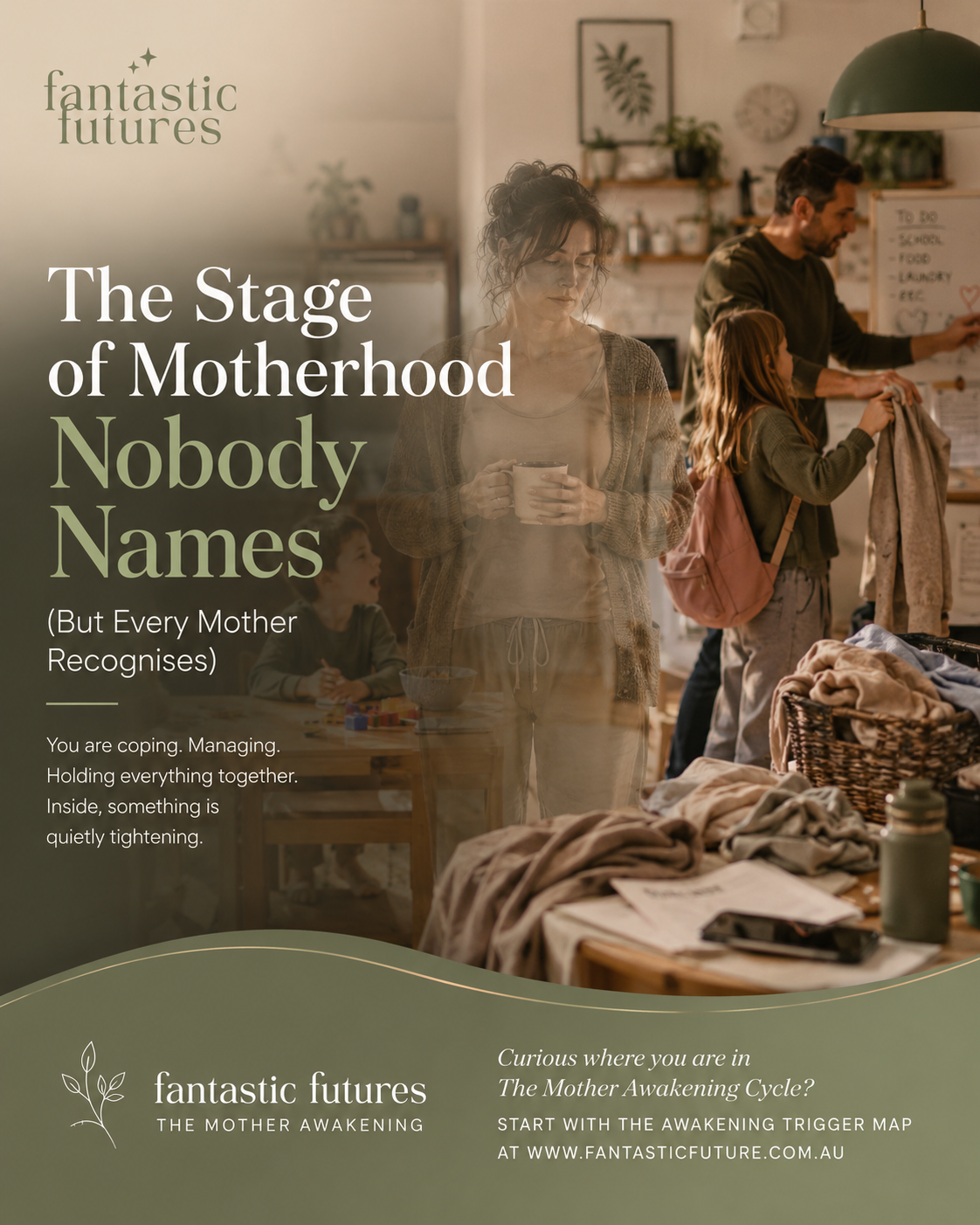
Many mothers experience a stage of motherhood characterised by chronic accommodation, where they consistently prioritise the needs of others while suppressing their own. This often develops from learned nervous system patterns rooted in childhood experiences, caregiving roles or people-pleasing tendencies. While accommodation is frequently praised as resilience or selflessness, prolonged accommodation can contribute to exhaustion, resentment, emotional disconnection and nervous system dysregulation. Recognising accommodation as a developmental stage within The Mother Awakening Cycle helps mothers understand their experience and begin the process of reclamation and self-reconnection.
There is a phase most mothers go through that no one talks about because, from the outside, it looks like everything is fine.
You are managing. You are coping. You are stretching yourself in all directions to absorb new responsibilities, hold things together, be what everyone needs. You tell yourself it is temporary. You are grateful, or you try to be. You look capable because you are capable.
Inside, though, something is quietly tightening.
This is Accommodation, and it is the invisible stage that comes before a mother hits her wall.
Why Accommodation Is So Easy to Miss
Our culture is extremely good at celebrating the capacity to accommodate. We call it resilience. We call it strength. We tell women they are amazing for holding so much. And sometimes that is true. But sometimes what we are actually celebrating is the long, slow process of a woman overriding her own needs so consistently that she can no longer hear them at all.
Accommodation is not a conscious choice. It is a learned nervous system response. If you grew up in an environment where your needs were secondary, or where you earned love through your usefulness, or where keeping the peace was more important than taking up space, then accommodation is the water you swim in. It does not feel like suppression. It feels like just being a good mother.
“Accommodation is where mothers learn to override themselves. And eventually, the system cannot sustain it.”
The accommodation phase can last years. Many mothers who find their way to therapeutic support have been in this phase for so long that they have genuinely lost track of where they end and everyone else begins. They do not know what they want because they have not asked themselves that question in a very long time.
What Comes After Accommodation
If accommodation goes on long enough without being interrupted by support or insight, it generally leads to fragmentation. The invisible load becomes too heavy. The nervous system, which has been running on override, starts sending distress signals. Rage. Resentment. Exhaustion that sleep does not fix. Emotional numbness. A feeling of watching your own life from a slight distance.
Fragmentation is not weakness. It is the body's honest response to having held too much for too long. It is actually a sign that something in you is still fighting to be seen.
But here is the thing: accommodation and fragmentation are both part of a larger developmental cycle that mothers move through, often repeatedly, as their children grow and life shifts. This cycle, which I call The Mother Awakening Cycle, is not a disorder. It is a developmental process. And understanding where you are in it changes everything.
Because once you can see the pattern, you are no longer inside it in the same way.
Naming the Stage Is the First Step Out of It
When I work with mothers, one of the most consistently powerful moments is when they recognise themselves in the accommodation stage. Not with shame. With relief. Because suddenly the years of quietly stretching themselves have a name, and a reason, and an explanation that is not their failure.
The fragmentation that followed was not them falling apart. It was the beginning of their awakening. And the awakening is always followed by reclamation, if someone is there to help them through it.
“You did not lose yourself because you were weak. You lost yourself because you were trained to be accommodating, and nobody told you there was a cost.”
You have probably been accommodating for a very long time. Not because anything is wrong with you. Because the pattern is old, it is familiar, and until now, nobody has given it a name.
This is me giving it a name.
Key Takeaways
Accommodation is a common but rarely recognised stage of motherhood.
It involves consistently overriding your own needs to meet the needs of others.
Many women mistake accommodation for resilience, strength or good motherhood.
Long-term accommodation can contribute to fragmentation, resentment and exhaustion.
Fragmentation is often a signal that something important within you needs attention.
Naming the pattern is often the first step towards change.
The Mother Awakening Cycle provides a framework for understanding this process.
FAQ Section
What is accommodation in motherhood?
Accommodation is a stage where a mother consistently adjusts, suppresses or overrides her own needs in order to meet the needs of others. Over time, this can become so automatic that she loses connection with her own wants, preferences and identity.
Is accommodation the same as being selfless?
Not necessarily. Healthy care for others includes caring for yourself. Accommodation becomes problematic when self-sacrifice becomes chronic and your own needs disappear from consideration altogether.
What happens when accommodation continues for too long?
Many mothers begin experiencing symptoms such as resentment, rage, emotional numbness, exhaustion, burnout or a sense of losing themselves. In The Mother Awakening Cycle, this often leads to a stage called fragmentation.
Why do mothers accommodate so much?
Accommodation is often linked to early experiences where love, safety or belonging were connected to being helpful, agreeable or responsible for other people's wellbeing.
Can you move beyond accommodation?
Yes. Awareness is often the first step. Once the pattern becomes visible, mothers can begin reconnecting with their own needs, boundaries and identity through the awakening and reclamation process.
